
Material Choices and Their Impact on Manufacturing
Choosing the right material is one of the most critical steps in product development — yet it’s often underestimated. Material selection doesn’t just affect how a product looks or feels; it directly shapes how it’s manufactured, what it costs, and how well it performs over time.
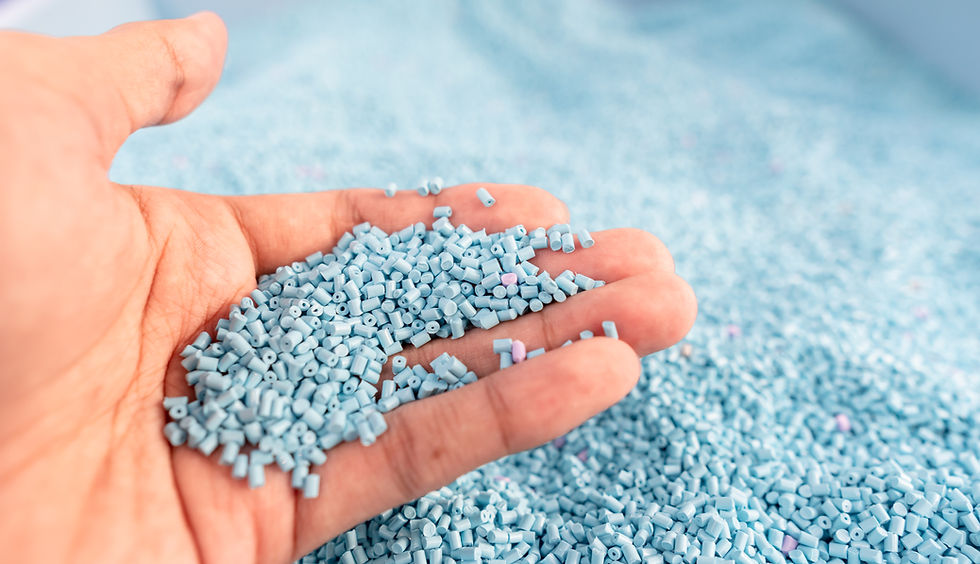
In this post, we’ll explore how material decisions influence manufacturability, cost, and performance — and why DFM (Design for Manufacturing) plays a key role in getting that balance right.
Why Material Choice Matters
When you select a material, you’re also making decisions about which manufacturing processes can be used, what tolerances are achievable, and how the product will behave in production. Each process — whether it’s injection moulding, casting, extrusion, or sheet-metal forming — has its own strengths and limitations.
Ignoring that link often leads to rework, cost blowouts, or production delays. DFM helps you identify the right combination early, so you’re not forced into compromises later.
Matching Material to Application
Every product operates under different conditions. That’s why material choice should always start with the application, use case, and environment — and sometimes even the target price range.
A material that works perfectly in one situation might fail in another. For example:
A marine component may prioritise corrosion resistance and UV stability.
A high-volume consumer product might need low-cost, recyclable plastics.
A structural part may call for stiffness and fatigue strength over aesthetics.
The point is that there’s rarely a single “best” material — only the one that best matches your requirements.
When Materials Can Be Replaced
Sometimes, the ideal material on paper isn’t the best choice in practice. Substituting one material for another can bring major benefits — lower cost, reduced weight, better manufacturability, or improved sustainability.
A classic example is replacing metals with plastics. Plastics can reduce cost and weight, eliminate corrosion issues, and simplify assembly. However, this kind of substitution isn’t just a swap. It requires a design rethink.
Different materials behave differently in production. Plastics may need draft angles, uniform wall thickness, and different joining methods. Strength, stiffness, and temperature resistance also vary widely, so prototypes and mechanical testing become essential to confirm performance.
In short, every material change brings new advantages — but it also means adapting your design to suit the new process and verifying that it still meets functional and safety requirements.
Material Grades Matter
Choosing the material type is only the first step. Within each material family, there are grades, and these grades can have a major impact on performance, processing, and cost.
For instance:
Different grades of steel vary in strength, machinability, and corrosion resistance.
Different plastics, even within the same base polymer, can differ in flow rate, heat tolerance, or UV resistance.
Aluminium alloys can vary in weight-to-strength ratio and surface finish quality.
Grades are where small technical details make a big difference. A slightly different resin formulation might reduce moulding cycle times by seconds — which, at scale, can translate into large cost savings.
Because of that, the exact material grade is often finalised during the DFM phase, once the production process and suppliers are confirmed. Selecting it too early can lead to unrealistic assumptions; leaving it too late can restrict design freedom.
Balancing Material, Geometry, and Process
A good DFM approach recognises that material, geometry, and manufacturing process are all interconnected.
For example:
A design that works in aluminium might be impossible in injection-moulded plastic without redesigning wall thickness and adding draft angles.
A component that’s perfect for machining might not suit extrusion because of its cross-section.
A softer material might need added ribs or supports to maintain structural strength.
Each adjustment ripples through the design. That’s why collaboration between design and manufacturing engineers early in the process is so important — the right combination of material, grade, and geometry can simplify production and avoid future issues.
The Cost Factor
Material cost is often one of the first considerations, but it’s not always the most important. A cheaper raw material might lead to higher processing costs, longer cycle times, or more waste. Conversely, a slightly more expensive grade might machine faster, mould more efficiently, or require fewer finishing steps.
DFM looks at total cost efficiency, not just raw material price. It’s about optimising across the entire product lifecycle — from sourcing and manufacturing through to assembly and long-term performance.
Bringing It All Together
Choosing materials isn’t just a design decision — it’s a manufacturing strategy. It affects tooling, assembly, testing, quality, and even how your product is perceived by customers.
By thinking about materials through a DFM lens, you:
Avoid costly redesigns later.
Ensure the selected process can meet your tolerances and production targets.
Balance performance, appearance, and cost effectively.
Improve reliability and product lifespan.
The earlier you make these considerations, the smoother your transition from design to production will be.
Final Thoughts
Material selection is one of those areas where experience and engineering judgment make a huge difference. At CRINNAC, we’ve seen how early collaboration between designers and manufacturers can save months of rework and thousands in tooling and testing costs.
By aligning material, grade, geometry, and process early in the design journey, you set your product up for success — not just in function, but in manufacturability and market performance.
This is the third post in our Design for Manufacturing series. In the next and final episode, we’ll explore how to bridge the gap between prototypes and full-scale production, and how DFM turns design intent into real, manufacturable results.


Comments